
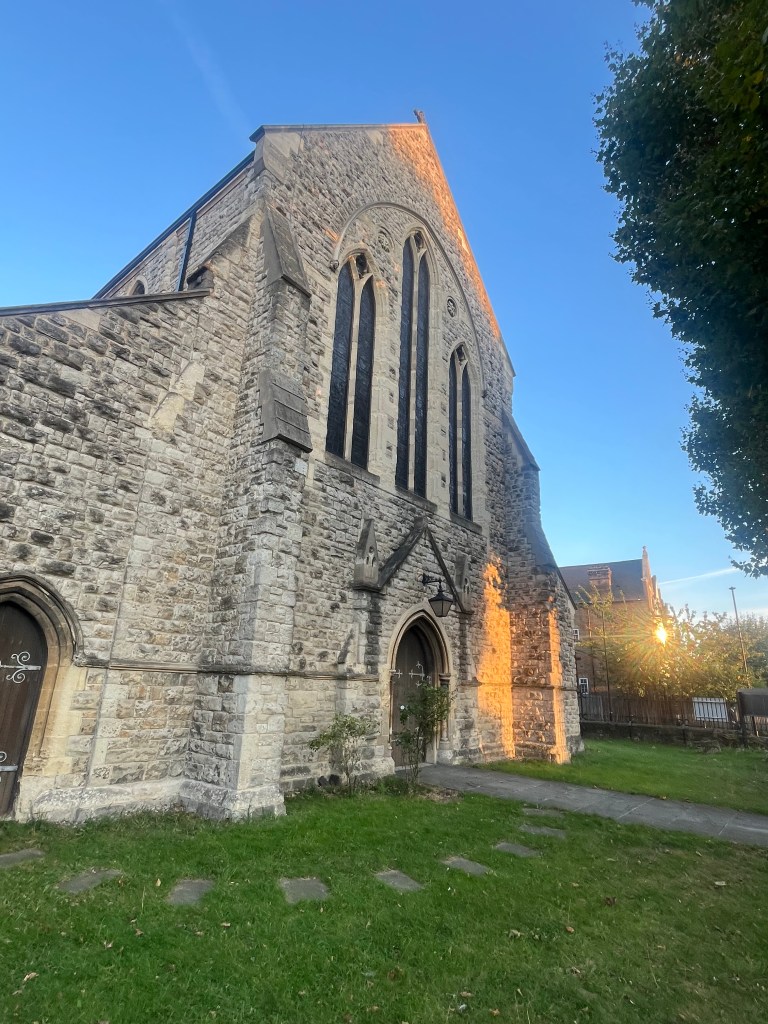
“Faithfulness is not about how strong our belief feels, but about returning again and again to the One who is always faithful. It is the quiet rhythm of remembering, returning, and giving thanks — the heartbeat that keeps our life with God alive.“
The Heartbeat of Faithfulness
Luke 17: 11–19 | 2 Timothy 2: 8–15
Over these past few weeks, as I have begun life here in North London, I have been reflecting with the church where I serve on what I call the heartbeat of Christian community: those deep rhythms that keep us alive in God and connected with one another.
We have explored prayer as the heartbeat of our life with God, compassion as the heartbeat of how we live with others, and abundance as the heartbeat that reminds us there is enough grace to go around.
This week, we turn to another rhythm that quietly runs through them all, the heartbeat of faithfulness.
Faithfulness as Remembering
The first reading we explore today is Timothy 2: 8-15 Saint Paul writes:
“Remember Jesus Christ, raised from the dead.”
Those few words sit at the very centre of Christian faith.
Faithfulness begins with remembering, not simply recalling facts but holding the story of Jesus close to our hearts and allowing it to shape who we are and how we live.
Each time the Church gathers, in scripture, in song, in prayer, and most profoundly in the Eucharist, we practise this remembering. We continue the narrative of our faith again and again that Jesus Christ, raised from the dead, is still at work in the world and among us.
Now, let’s be clear – Faithfulness does not mean we never doubt or fail. What it means is we keep remembering who holds us. We keep coming back to the truth of our faith that gives us life, the story that tells us who we are and to whom we belong.
So when we say in the Eucharist, ‘We remember his death, we proclaim his resurrection,‘ we are keeping our hearts in rhythm with God’s own heartbeat, faithful always to Jesus Christ.
Faithfulness as Relationship
So, if Saint Paul teaches us that faithfulness begins in remembering, Saint Luke in our gospel account, reminds us that faithfulness grows through relationship.
In Luke’s gospel, ten lepers cry out to Jesus for mercy and all are healed. But only one turns back. Only one comes close again. And that one is a Samaritan, an outsider.
The others receive healing, but this one receives relationship.
Jesus says, “Your faith has made you well.” The word in the Greek is, sozo, which means more than physical healing; it means to be made whole.
Wholeness comes through relationship, through turning back to the one who heals us.
Faithfulness is not an abstract idea. It is about being present, present to God and to one another: in worship, in service, in conversation, around the altar. It is about returning, again and again, to our relationship with God that makes us whole.
That is the rhythm of faithfulness: remembering, returning, and giving thanks.
None of us can sustain faith alone. Faith grows where we are seen and known, where we are held by others when our own faith falters.
That is what the Samaritan experienced when he met Jesus, not just a cure but communion.
Faithfulness as Gratitude – Our Eucharistic Life
The Samaritan’s faithfulness shows itself in gratitude. He turns back, praising God with a loud voice, falling at Jesus’ feet to give thanks.
That movement of turning back, praising, and giving thanks is the very pattern of our worship. Every Sunday the Church does what that Samaritan did: we return to Jesus (as we do at the moment of reconciliation), we praise God (as we do in the Gloria), and we give thanks (for that is the eucharist).
We are, quite literally, a Eucharistic people, for Eucharist means thanksgiving. Gratitude is at the heart of who we are.
Our liturgical life forms us in that rhythm of thanksgiving. It teaches us to notice grace, to name it, and to give thanks for it, even when life feels hard and even when the world seems uncertain. As someone who is formed and lives life in the Anglican Catholic Tradition, this – ‘Remembering, Returning, and Giving Thanks’ this rhythm is a ‘Super Power’ of the liturgical life to be celebrated.
And this faithfulness is not about pretending everything is fine. It is about giving thanks even as we keep trusting.
Every time we gather at the altar, we practise faithfulness: remembering, returning, and giving thanks, as generations before us have done and as generations after us will continue to do.
In that rhythm, we are made whole again and again and again.
Faithfulness Grounded in God’s Own Faithfulness
Saint Paul writes with such tenderness:
“If we are faithless, he remains faithful, for he cannot deny himself.”
That is the heartbeat that keeps everything else alive. God’s faithfulness toward us does not falter, even when ours does.
We live in a world where commitment can feel fragile, where relationships break, promises fail, and attention shifts. But God’s faithfulness is the steady rhythm underneath it all.
When we forget, God remembers.
When we wander, God calls us home.
When we falter, God’s heart keeps beating for us.
And that is the faithfulness we are called to mirror, not a perfectionist faith but a steadfast love that keeps showing up. It is what allows us to be patient with one another, to keep forgiving, to stay hopeful. Our faithfulness always flows out of God’s first.
Faithfulness that Welcomes the Outsider
Finally, faithfulness is never closed in on itself.
It always opens outward, just as Jesus did.
It is the Samaritan, the outsider, who shows us what true faith looks like.
Faithfulness means keeping our hearts open to those who might not yet feel they belong, creating space, widening the table, believing that grace is always larger than we first imagined.
Faithfulness in action looks like hospitality, listening, and the courage to keep building community, even in small, ordinary ways. That is what keeps the heartbeat strong. And that will look different for all of us, whatever community we are part of.
A Closing Thought
Faithfulness is not about how strong our belief feels. It is about returning again to the One who is always faithful.
I encourage us all be people who remember Jesus Christ, who keep turning back, keep giving thanks, and keep making space for others.
For as the psalmist writes:
“The Lord is good; his steadfast love endures forever,
and his faithfulness continues through all generations.”
(Psalm 100: 5)
Amen.
 Ruth Greenaway-Robbins
Leave a comment