Ruth Greenaway-Robbins

An Anglican Priest sharing sermons, musings and thoughts

  • On the Feast of the Baptism of Christ, the Church invites us to linger at the riverbank.

    This moment – quiet, ordinary, almost easily overlooked – stands at the heart of who Jesus is, and therefore at the heart of who we are called to be.

    Jesus comes to the Jordan and steps into the water. Not because he needs repentance. Not because he has anything to prove. He comes because he chooses to stand with humanity—in the muddy, ordinary waters of real life. He joins the crowd. He waits his turn. He receives what others are receiving.

    And that choice matters.

    Jesus drawing close in Baptism

    Jesus’ baptism is another sign of Jesus drawing close to us in his humanity.

    Because this is who God is.

    Jesus is baptised not to distance himself from us, but to draw near. Not to mark himself out as different, but to place himself firmly among us. He enters the water to sanctify it, to show that there is no part of human life God refuses to inhabit.

    This is a God who does not save from a safe distance, but from the inside.

    And as Jesus comes up from the water, something extraordinary happens. The heavens are opened. The Spirit descends. And a voice speaks:

    “This is my Son, the Beloved, with whom I am well pleased.”

    Before Jesus has healed anyone.
    Before he has preached a sermon.
    Before he has gone to the cross.

    God’s delight comes before Jesus’ doing.

    That ordering is everything.

    Beloved, before we do anything at all

    This is why the Baptism of Christ is not just about Jesus. It is about us.

    Baptism is not a badge of achievement. It is not a reward for goodness or certainty or perfect belief. It is not something we earn.

    Baptism is first and foremost God’s act of love.

    In baptism, we are named and claimed. We belong before we understand. We are held before we can articulate what we believe. We are loved before we do anything useful or impressive or faithful.

    I was baptised as a baby, in March 1980, at St Mary le Wigford in Lincoln. I don’t remember the day – apparently I protested loudly at the cold water – but I do remember the baptisms of my own children. And I am deeply grateful that those who loved me chose baptism for me before I could choose it for myself.

    In our family, we mark our baptism days each year. We have cake. We give thanks. It’s simple – and deeply meaningful.

    Our children were baptised on their name days. Simeon at Candlemas. Anastasia (whose name means resurrection) at Easter. These double celebrations matter to us, because baptism is something to celebrate. It marks a life as precious. Claimed. Held within God’s promise. Well, and of course, the cake helps!!!

    However, and whenever baptism happens – whether as a child or as an adult, whether clearly remembered or quietly received – it is a holy moment in a human life.

    So holy.
    So vital.
    That Jesus himself chose it.

    We are beloved … even if we cannot comprehend it

    There is another reason this feast matters so deeply to me.

    The Baptism of Christ marks an anniversary in my own life from a time when I had fallen a long way from believing myself beloved. Thirteen years ago, I could not have imagined where and how I am today – truly knowing and trusting that I am loved by God. If the woman I was then could see me now, believing this not just in theory but in my bones, she would be amazed. Quite frankly, she would be amazed at a great many things.

    I share this because allowing ourselves to be truly beloved of God can be surprisingly hard. Life has a way of chipping away at that truth. Experiences of loss, failure, disappointment, or hurt can quietly convince us that we are not enough – that God’s love must surely be conditional, fragile, or withdrawn.

    And so, we drift towards self-doubt.
    Towards self-criticism.
    Towards the belief that everyone else is more faithful, more worthy, more lovable than we are.

    But the voice at the Jordan speaks directly into that fear.

    God’s deepest desire for us is not that we prove ourselves, but that we know ourselves – first and always – as loved. Beloved. Held. Chosen. Not because we have earned it, but because that is who God is.

    To live as a baptised person is, again and again, to return to that truth. To let God name us when we have forgotten how to name ourselves. To believe that belovedness is not something we grow out of, fall away from, or lose – but something we are continually invited to receive.

    “You are my beloved”

    The voice from heaven does not only belong to Jesus’ story. It echoes into ours.

    What God says to Jesus, God longs for us to hear too:

    You are my beloved child.
    With you, I am well pleased.

    Not because you are perfect.
    Not because you never doubt.
    Not because you always get it right.

    But because you are God’s.

    This week, I invite you to let that truth settle somewhere deep. Perhaps even to pray it slowly:

    I am (your name),
    a beloved child of God,
    in whom God is well pleased.

    Let that be the place from which we pray.
    The place from which we love.
    The place from which we live.

    Because the Christian life does not begin with doing more.
    It begins with receiving love.

    And everything else flows from there.

    “As soon as Jesus was baptized, he went up out of the water. At that moment heaven was opened, and he saw the Spirit of God descending like a dove and alighting on him. And a voice from heaven said, “This is my Son, whom I love; with him I am well pleased.” Matthew 3: 16-17

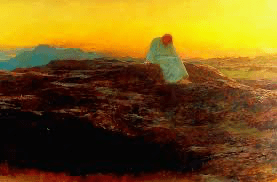
    The image that accompanies this post, is from a prayer walk I took on the feast of the Baptism of Christ in 2020. I was praying the words “you are my beloved child” and at that moment the sun broke through the clouds. What a beautiful sign it was.

  • It is no accident that Christians gather at night to begin our celebration of Christmas.

    For Christmas does not begin in the full light of day, but in the quiet hours when most of the world is asleep. In scripture, night is never simply the absence of light. Night is where things happen. Night is where God so often chooses to draw close.

    The prophet Isaiah said:

    “The people who walked in darkness have seen a great light”

    Not people who briefly passed through the shadows.
    But people who walked there.
    Who knew it.
    Who lived in it.

    Night can be beautiful. It can also be lonely. It can feel strange, unsettling, or heavy. Those who work the night shift often speak of this, how the night has its own texture, its own intensity. Things surface at night that daytime can keep hidden.

    One of the places I have known this most deeply is in the nights of early parenthood. Anyone who has lived closely with a newborn knows this kind of night. The house is quiet. Time stretches. Sleep feels optional. The work is simple and exhausting: feeding, soothing, holding.

    And yet, some of the most extraordinary moments happen then.

    I remember sitting in the soft glow of a lamp, holding one of our children, and feeling them lock eyes with us. Not demanding anything. Not smiling particularly. Just looking. Awake. Attentive. Calm in a way that only seemed to come at night.

    In those moments, something profound was happening. A quiet meeting. A recognition. As though, in the stillness, their personhood was beginning to emerge, and we were being invited simply to behold it.

    There is a word sometimes used for this kind of moment: reverie. It names a deep, gentle attentiveness being fully present to another, without judgement or demand. Simply holding them in love.

    I wonder if something like this helps us glimpse our relationship with God.

    Because at Christmas, God does not come first as teacher or judge or ruler. God comes as a child. God comes to be looked at. To be held. To be fed through the night. Mary and Joseph behold not only the vulnerability of a baby, but the vulnerability of God.

    And in Jesus Christ, Emmanuel, God with us, we discover this:
    We are always already beheld.

    Known.
    Cherished.
    Held in love, dignity, and divine joy – simply because we are.

    For love came down at Christmas.

    The Christmas story is full of night people. Like shepherds, keeping watch over their flocks by night – not romantic figures, but working people. Outdoors. Cold. Tired. Faithful in the unglamorous hours.

    And it is to them – not to the powerful, not to those asleep behind closed doors – that the angels appear.

    And this season we might think, too, of all those who are awake while others sleep: nurses moving quietly along hospital corridors, midwives receiving new life, care workers, drivers, and emergency crews. Christmas happens among them, too. God chooses the night shift.

    And God chooses to arrive as a baby.

    Not as a blazing light that overwhelms the darkness, but as something fragile. Something that cries. Something that depends on the steady presence of others to survive the night.

    Isaiah speaks of a child born for us – ‘Wonderful Counsellor, Mighty God, Prince of Peace’. And then Saint Luke tells us where that promise lands: not in a palace, but in a feeding trough. Not in certainty, but in vulnerability. Not in daylight, but in darkness.

    The light that comes does not erase the night.
    It enters it.

    This matters, because for many people, night is not particularly beautiful – instead it is heavy. For night can amplify grief. At night loneliness speaks louder. Anxiety finds more room in the night hours. Pain is harder to distract from as darkness falls.

    There are people here tonight, or people who we know, for whom Christmas is not cosy, but instead it is complicated.

    And into that – not around it, not instead of it – God is born.

    The shepherds are afraid. Of course they are. Night, angels, sudden glory – fear is a perfectly human response. But the first words they hear are not explanation or instruction, but reassurance:

    “Do not be afraid”

    Fear does not disqualify them from receiving the good news. Fear is simply where the good news meets them.

    And the sign they are given is not power, but tenderness: a baby, wrapped in cloths, lying in a manger. A sign that God has chosen to stay. To be held. To be present through the night.

    Tonight, we are not invited to solve the mystery, but to sit with it. To let the quiet do its work. To allow the darkness to be what it is – while trusting that light has entered it, and will not leave it unchanged.

    Because the miracle of Christmas is not that night disappears.
    It is that God stays.

    God stays with the sleepless parent.
    With the anxious heart.
    With the lonely, the watchful, the weary.

    God comes for hope to be born – small, fragile, and real.

    And like the shepherds, we are invited to go and see.
    To draw near.
    To treasure these things and ponder them in our hearts.

    So tonight, before anything else is asked of us, this is what we are given: God comes near. God comes not to stand over us, but to draw close – to behold us, and to allow himself to be beheld. In the child laid in the manger, God looks upon us with love that is attentive, patient, and unafraid of our fragility. We do not need to explain ourselves, or prove ourselves, or have everything sorted out. We are known already. Seen already. Held already – in love, dignity, and divine joy.

    For in the sight of God we are welcomed by one who knows vulnerability from the inside. A child who must be held to survive the night. A God who chooses dependence, closeness, and trust. We can come as we are – weary, hopeful, uncertain, grateful, afraid – and we will find ourselves met by a love gentle enough to hold us, and brave enough to stay. For we are cherished. We are not alone. And God is nearer than we dare to imagine.

    Amen


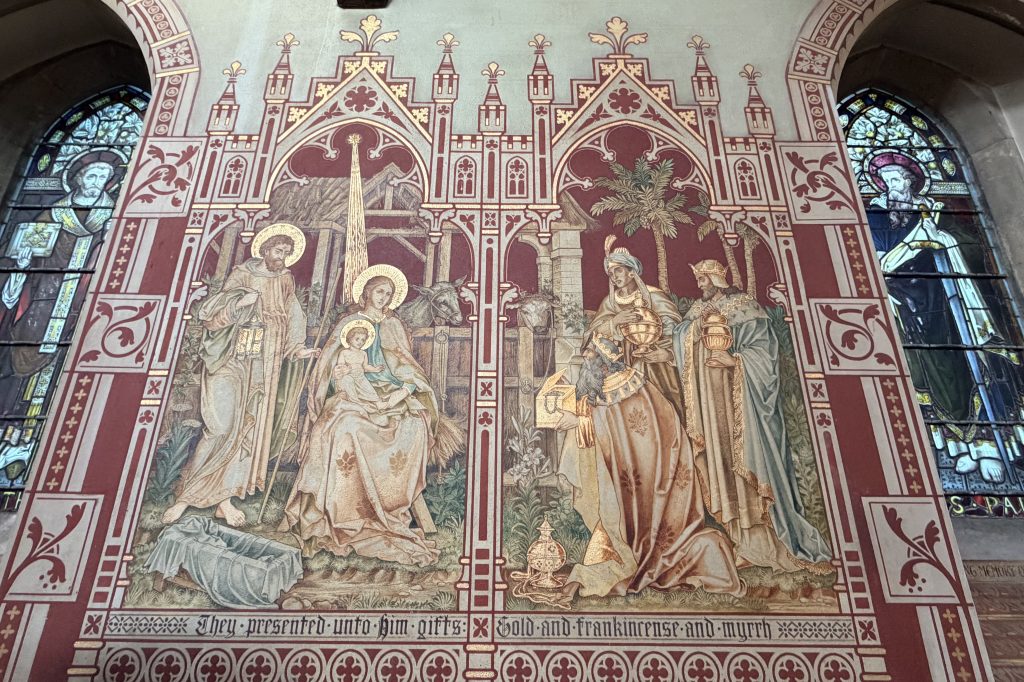
    The image in this post is of one of the wall paintings in the church where I am a priest, St. Andrews N16. They are deeply unique, and the photo does not do them justice.


    Wishing you a blessed and peaceful Christmas, where I pray you feel known and loved by God.

  • “Come and save us, O Lord our God”

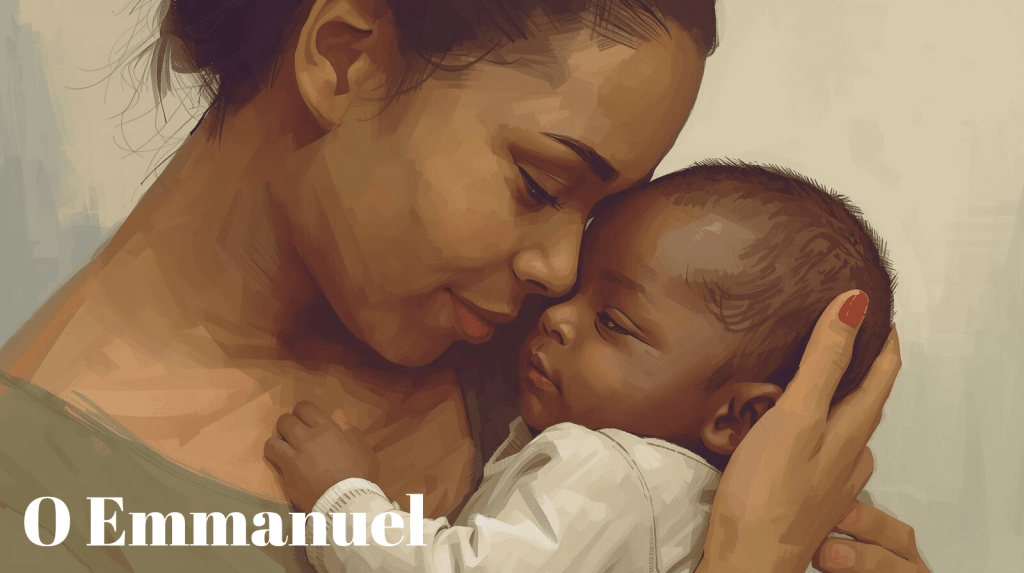
    O Emmanuel, our King and our lawgiver,
    the hope of the nations and their Saviour:
    Come and save us, O Lord our God.

    After all the titles,

    Wisdom.
    Lord.
    Root.
    Key.
    Dawn.
    King.

    We arrive at a name.

    Each has drawn us closer, narrowing the focus, sharpening the longing. And now, on the final day before Christmas Eve, the Church dares to speak the most astonishing truth of all: Emmanuel – God with us.

    Not God above us.
    Not God beyond us.
    Not God waiting at the end of our striving.

    God with us.

    This is the heart of Advent. All the hopes we have named, for justice, liberation, light, unity, and peace, are not fulfilled by God acting from a safe distance, but by God choosing to draw close in vulnerability.

    Isaiah’s promise of Emmanuel was first spoken into a time of fear and political uncertainty. None of this prophecy was an abstract theological idea, but instead a sign given to a trembling people: you are not abandoned. God has not withdrawn. Even now, God is with you.

    As Christians, we receive that promise anew in Jesus Christ.

    The one we have called King does not arrive with an army.
    The one we have named Lawgiver does not come coercively.
    The one we have longed for as Saviour comes as a child – utterly dependent on his caregivers.

    This is not a failure of power, but its redefinition.

    In Christ, God chooses to dwell fully within the human condition, within bodies that ache, relationships that strain, lives shaped by love and loss. Emmanuel does not wait for the world to be ready. He comes into the mess of it. Into occupied land. Into poverty. Into uncertainty.

    And he comes still.

    To pray O Emmanuel is to recognise that salvation is not only something that happens to us, but something that happens with us. God does not save humanity by standing apart from it, but by joining it, sharing our breath, our hunger, our fear, our joy.

    There is also a tenderness in the final plea of the antiphon.

    “Come and save us, O Lord our God.”

    No more imagery. No more metaphor. Just need.

    This is the prayer we return to again and again; personally, communally, globally. When words run out. When explanations fail. When the world feels heavy with grief and injustice. Come. Save us. Be with us.

    And the astonishing claim of Christmas is that God answers this prayer not with argument, but with presence.

    The name Emmanuel does not promise that everything will be easy. It promises that we will not be alone. It assures us that God is found not only in holiness and light, but in ordinary days and fragile lives. In the manger. At the table. On the road. At the cross.

    And so, on this final day of Advent waiting, we do not strain forward any longer.

    We make space.

    We prepare a place for God to dwell.

    Today, I encourage us all, and I really do include myself here, to take a moment to be still, to make space, and engage in prayer or wondering, with Emmanuel – God with us today. Allowing God to draw close to us, in our busyness, in our grief, in our hopefulness, in our tiredness. Giving us a moment in the chaos of life and its grief to be with us.

    I have one final musical offering as we come to the end of this journey through the O Antiphons. I have decided to share this beautiful version of the full hymn “O Come, O Come Emmanuel” sung by Apollo5 and The VOCES8 Foundation Choir and Orchestra, arranged by Taylor Scott Davis conducted by Barnaby Smith. It is a beautiful arrangement and holds both the immensity of the gift of Emmanuel God with us and also the gentleness and mystery of a baby come in all vulnerability to save us. There is a beautiful shimmering quality to the whole piece.

    And thank you for joining me on this journey through the O Antiphons. The idea of daily reflections on the O Antiphons came from reading Cosima Clara Gillhammer’s book ‘Light on Darkness: The Untold Story of the Liturgy’ whilst on holiday in Majorca in the spring this year. It is a book I would 100% recommend. And reminded me of the great beauty of the O Antiphons, which for me was formed in the daily office and the musical versions I have sung for more years than I care to remember.

    May these final moments of Advent be a blessing to you.

    O Emmanuel,
    God with us in flesh and fragility,
    draw near to your waiting world.
    Be present in our joy and our sorrow,
    our hope and our fear.
    Come and save us, Lord our God,
    and dwell with us always.
    Amen.

  • “The cornerstone making both one”

    O King of the nations, and their desire, the cornerstone, who makes both one: Come and save man, whom you formed from clay.

    For many of us, it carries the weight of disappointment: leaders who divide rather than unite, systems that privilege some and crush others, voices that grow louder while compassion grows thin — even dismissed as weakness. Against this backdrop, we dare to pray O Rex Gentium: O King of the nations. Not ruler of one people, one ideology, or one border, but of all.

    And not a king imposed by force, but one named as the desire of the nations.

    That phrase is striking. Even where Christ is not named, the longing he fulfils is present: the ache for justice, the hope for peace, the yearning to belong without fear. These desires cross cultures, languages, and histories. They surface in protest and in prayer alike. Advent recognises them as holy longing, and dares to say they find their centre in Christ.

    Yet this kingship is defined not by dominance, but by architecture.

    “The cornerstone making both one.” In ancient buildings, the cornerstone determined the alignment of everything else. Get it wrong, and the whole structure becomes unstable. Get it right, and walls that might otherwise pull apart are held in relationship to one another.

    Paul draws on this image in Ephesians, speaking of Christ as the one who breaks down dividing walls, particularly between those we might define as insiders and outsiders. The cornerstone does not erase difference; it holds difference together. Unity here is not uniformity, but reconciliation.

    This is the kingship Advent places before us.

    We wait for a king who does not exploit division, but heals it.

    A king whose authority is not threatened by plurality.

    A king whose reign makes space for many stories, while drawing them towards justice and peace.

    I don’t think I can write about O Rex Gentium without naming the rise of nationalism I am witnessing within Christianity here in the UK but with a particular perniciousness in England, a phenomenon not confined to this country, but visible across the globe. There is a pervasive tide advancing in which the language and symbols of Christianity are being claimed in the service of nationalism and exclusion. Recently I read the stark observation that “the far right have parked their tanks on the lawn of the Church of England” (Observer, 14 December 2025). It is an image that unsettles precisely because it names something many of us sense but struggle with and the absolute fear this brings to so many.

    This vision could not be further from the Christ we name as O Rex Gentium.

    The King of the nations is not claimed by one people, one culture, or one political project. He is not enthroned through dominance or defended by fear. Instead, this King is the desire of all nations, the one who draws rather than coerces, who gathers rather than divides. Formed from the same clay as all humanity, Christ stands in radical solidarity with the whole human family, not elevating one group over another, but revealing the deep belonging of all.

    To invoke Christ as O Rex Gentium is therefore to resist every attempt to bend Christianity into a tool of exclusion. It is to proclaim a kingship that dismantles walls rather than fortifies them, that refuses the false safety of nationalism in favour of the costly, vulnerable work of reconciliation. This King does not reign by narrowing the circle of who belongs, but by widening it until all are gathered into one.

    And then the antiphon grounds this vast, cosmic vision in something utterly ordinary:

    “Come and save the human race, which you fashioned from clay.”

    Clay is fragile. Clay cracks when it dries. Clay needs water and care. To speak of humanity as clay is to remember both our dignity and our vulnerability. We are shaped by God’s hands, and easily broken.

    This prayer refuses to spiritualise salvation. It remembers bodies. Lives. Earth. The stuff of creation. The king we await does not hover above humanity, but kneels in the dust and works with it. In Christ, the one through whom all things were made enters fully into what it means to be human; limited, dependent, embodied.

    There is humility here too.

    If we are clay, then none of us is self-made. None of us stands above another. This antiphon quietly dismantles hierarchies of worth and reminds us that every person; refugee and ruler, neighbour and stranger, it shares the same origin and the same need for grace.

    To pray O Rex Gentium is to ask not only for rescue, but for re-ordering: for a world rebuilt around a different cornerstone, and for our own lives to be realigned where they have bent towards fear, pride, or despair.

    As Advent draws close to Christmas, this antiphon widens our gaze. The child we await belongs not to one nation alone, but to the whole human family. His coming is not a private comfort, but a public hope.

    And so we pray, with clay-stained hands and expectant hearts:

    come and save us – all of us.

    Today’s musical offering comes from the Polish composer Paweł Łukaszewski, whose setting of the O Antiphons is quite new to me. There is a sense restraint in his writing, a sense of listening as much as proclaiming, that feels particularly fitting for O Rex Gentium. The music does not rush to resolution; it holds tension gently, allowing longing, fragility, and hope to coexist. In a world strained by division, this setting sounds like a prayer that refuses force, trusting instead in patient gathering of voices held together, like stones aligned around a true cornerstone.

    O King of the nations,

    desire of every heart,

    cornerstone of a divided world:

    re-align our lives with your justice,

    soften what has hardened in us,

    and remake us, fragile clay,

    into a dwelling place of peace;

    for you gather all things into one,

    and your kingdom has no borders.

    Amen.

  • “Come and enlighten those who dwell in darkness”

    O Morning Star,
    splendour of light eternal and sun of righteousness:
    Come and enlighten those who dwell in darkness
    and the shadow of death.

    On this day, the light turns.

    Today, the 21st of December, marks the winter solstice – the longest night, the deepest dark. From here, almost imperceptibly at first, the days begin to lengthen. The change is subtle, easily missed. And yet it is real. Something has shifted.

    It is no accident that the Church places O Oriens here.

    Oriens means dawnrisingthe east. It names the moment when light first appears – not in fullness, but as promise. A pale glow on the horizon. Enough to say: the night will not have the final word.

    This antiphon draws together powerful images: Morning Starsplendour of light eternalsun of righteousness. These are not decorative titles. They speak of light that does more than illuminate, instead it reminds us of light that heals, restores, and re-orders what has been bent out of shape.

    Malachi’s promise of the sun of righteousness rising with healing in its wings is not about brightness alone. It is about justice. About warmth returning to cold places. About life stirring where numbness has set in. Reminds me always of The Lion, the Witch, and the Wardrobe as the spring returns when Aslan frees them from perpetual winter.

    And still, the prayer of Malachi is honest: “those who dwell in darkness and the shadow of death.”

    Again, not passing through, but dwelling. Living there. Learning how to survive with limited vision. Darkness here is not failure; it is a condition. And Advent refuses to shame that reality. Instead, it names it – and prays light into it.

    There is something deeply gentle about O Oriens.

    Unlike the previous antiphons that cry out for rescue and release, this one asks simply to be enlightened. To see. To be warmed. To have the shadows loosen their grip. Sometimes what we need most is not for everything to change at once, but for enough light to take the next faithful step – to see some hope returning.

    In the Christian story, Christ is not only the light that exposes; he is the light that accompanies. He does not blind us with sudden brilliance. He comes as dawn.

    This matters pastorally, spiritually, and personally.

    Many of us live with long shadows, grief that lingers, uncertainty about the future, weariness that sleep does not fix. We carry the weight of the world’s pain alongside our own. And yet Advent insists that even here, light is already at work. Not yet noon. Not yet complete. But real.

    To pray O Oriens is to trust that God’s coming does not depend on our readiness. The sun rises whether or not the world is prepared. Light breaks in because that is its nature.

    And the Church, standing in this in-between space – after the longest night, 3 days until we welcome the coming eve of Christmas – dares to say: look east. Watch the horizon. Pay attention to small signs of change. A softened heart. A renewed courage. A moment of clarity. A glimmer of hope.

    Christ comes not only to banish darkness, but to dwell within it – until it is transformed from the inside out.

    So today, we wait not with clenched fists, but with lifted eyes. The dawn is nearer than it was and that is the start of the journey.

    Today’s musical expressions of O Oriens are plentiful. I love O Radiant Dawn by Sir James MacMillan, one of my favourite composers; his rendering is mesmerising. However, in light of what I have written, it is the beautiful and ethereal setting by Cecilia McDowall that, for me, truly holds the space of those who dwell in darkness. There is dissonance within the hopefulness of the music; the expansiveness itself is unsettled. This feels true to the experience of those who live in dark places – not without hope, but watching and waiting for the horizon to brighten.

    O Morning Star,
    light that rises even after the longest night,
    shine upon all who live in shadow.
    Warm what has grown cold within us,
    heal what is weary or wounded,
    and lead us into your gentle day.
    We wait for you, light of the world.
    Amen.

  • “You open, and no one can shut”

    O Key of David and sceptre of the House of Israel;
    you open and no one can shut;
    you shut and no one can open:
    Come and lead the prisoners from the prison house,
    those who dwell in darkness and the shadow of death.

    Keys are small things, but they can carry immense power, hold remarkable memories, 

    A single key can grant access or deny it. It can unlock a home, a cell, a future or leave someone waiting outside, unheard. To speak of Christ as the Key of David is to name authority, yes, but a particular kind of authority: one that opens rather than hoards, that releases rather than confines.

    I remember, at my licensing by the Bishop here in the church earlier this autumn, being handed an enormous bunch of keys. I felt their weight immediately, and they still baffle me on a daily basis, so many doors, so many locks. And yet, without them, I cannot enter our beautiful church building or do the work to which I have been called. Keys carry weight in more ways than one: they hold power and responsibility, and at their best, they are given not to shut people out, but to open doors.

    The image comes from Isaiah, where the key is entrusted to one who will open doors no one else can open. In the ancient world, keys were worn across the shoulder – visible signs of responsibility. This was not private power, but public trust. To hold the key was to be accountable for who was let in, and who was set free.

    Advent dares to say that this authority belongs to Christ.

    Not to emperors, not to systems, not to institutions, not to the loudest voices or the strongest hands, but to the one who comes quietly, born among the poor, laid in a feeding trough. The sceptre of the House of Israel appears not as a weapon, but as a promise: authority exercised for the good of all.

    And the antiphon is clear about what this authority is for.

    “Come and lead the prisoners from the prison house, those who dwell in darkness and the shadow of death.” This is not abstract language. Scripture knows that prisons are real, made of stone and iron, but also that captivity takes many forms. Fear, addiction, grief, shame, poverty, injustice, despair. Some prisons are visible; others are carried inside the body and the heart.

    To pray O Clavis David is to acknowledge both kinds.

    It is to name the places where doors feel firmly shut: in our lives, in our communities, in the world we watch on the news. It is to admit how easily systems become locked, how quickly people are labelled, excluded, forgotten. And it is to ask for a different kind of opening: not naïve optimism, but real release.

    There is a sharp edge to this antiphon, too.

    “You open and no one can shut; you shut and no one can open.”  I believe this is not about control for its own sake. It is about truth. Some doors should be closed: the doors that lead to exploitation, abuse of power, and dehumanisation. Advent hope is not permission for everything to continue as it is. It is the courage to believe that God’s justice will have the final word.

    And then comes the deepest image of all: “those who dwell in darkness and the shadow of death.”

    These words echo the psalms – and the long nights of winter. They speak of people who have lived so long without light that darkness feels normal. Who are not just passing through shadows, but dwelling there. Waiting there.

    Advent does not rush past this. It lingers long enough to say: God sees you. God comes for you. The key turns even here. Even when you can’t believe for yourself.

    In Jesus, the Key of David does not unlock from a distance. He enters the darkness himself. He knows confinement, fear, abandonment, and death – and still opens a way through. His authority is forged not in avoidance of suffering, but in solidarity with it.

    So, when we pray this antiphon, we are not simply asking for doors to open. We are asking to be led, out of what confines us, into light we cannot yet imagine.

    And we are trusting that the one who holds the key is gentle enough to wait with us as the door opens.

    Today I have chosen the beautiful music of Gabriel Jackson. His O Clavis David unfolds with an expansive generosity, as if a door has been flung wide open before us. It then draws back into a place of quiet gentleness, as though God is patiently coaxing those of us who need it through the very doors that long to be opened.

    O Key of David,
    holder of doors and keeper of hope,
    unlock what binds us
    and lead us into your light.
    Free all who dwell in darkness,
    and open a way where none seems possible.
    We wait for you, bringer of release.
    Amen.

  • “Come and deliver us, and delay no longer”

    O Root of Jesse, standing as a sign among the peoples;
    before you kings will shut their mouths;
    to you the nations will make their prayer:
    Come and deliver us, and delay no longer.

    Roots are usually hidden.
    They work quietly beneath the surface – anchoring, feeding, holding fast. We tend to notice the visible parts of life: branches heavy with fruit, leaves catching the light, flowers opening in season. But without roots, nothing endures. Nothing grows.

    To call Christ the Root of Jesse is a strong and unsettling image. Jesse, the father of King David, represents a royal line that once flourished and then failed. By the time Isaiah speaks of a root emerging, the great tree of David’s kingdom has been cut down to a stump. What remains looks lifeless. Power has been lost. Hope feels unrealistic.

    And yet Isaiah insists: from that stump, something new will grow.

    This antiphon does not imagine salvation arriving through strength or success, but through what looks small, buried, and overlooked. A root pushing its way through hard soil. Life beginning again where history appears to have ended. This is a wild promise – a God who reveals the kingdom not by erasing loss, but by working within it.

    Advent is honest in this way. It does not pretend the world is fine. It acknowledges broken systems, exhausted leaders, and promises that have not been kept. Advent does the messy stuff of life well. We pray O Radix Jesse not from a place of triumph, but from the ache of waiting – waiting for something real to take root again.

    For me, the image of the root also echoes my experience of time spent in therapy. Therapy is rarely about quick fixes. It involves slowing down, digging beneath what is visible, and allowing things long buried to be gently – and sometimes painfully -unearthed. There is an inevitable season of disturbance: soil turned over, roots exposed, familiar ground unsettled. It can feel worse before it feels better. And yet, without that unearthing, there can be no deep healing, no lasting growth.

    The work happens quietly. Often invisibly to most, only visible to the client, therapist, and of course, God. You perhaps leave a session feeling no immediate change, no dramatic resolution – and yet something is shifting beneath the surface. Strength is being re-formed at the root.

    This feels deeply resonant with O Radix Jesse. God’s deliverance does not bypass the hard ground of our lives. It enters it. Redemption grows not despite the disturbance, but through it.

    The antiphon continues: “standing as a sign among the peoples; before you kings will shut their mouths.” This is not the language of domination, but of truth. Kings fall silent not because they are crushed, but because their authority is revealed as limited. The Root of Jesse does not shout louder than the powerful; it renders them speechless by unveiling a different kind of power altogether. What an image for our loud world.

    And this sign is not only for Israel. “To you the nations will make their prayer.” From the beginning, this hope is expansive. What grows from Jesse’s root is not a private salvation, but a gathering place — where diverse peoples find safety, meaning, and belonging.

    This matters deeply in Advent.

    We are waiting for a child born into a particular story – Jewish, rooted, specific – and yet whose life reaches far beyond any one people. Paul will later echo Isaiah, naming Christ as the hope of the Gentiles. The root holds together memory and promise, heritage and future, local story and global longing.

    The final plea of the antiphon is urgent: “Come and deliver us, and delay no longer.” There is impatience here, even desperation. This is not polite prayer. It is the cry of those who know the ground is fragile and time matters — those who cannot afford for justice to be postponed yet again.

    And perhaps this is where the antiphon meets us most honestly.

    We long for things to change – in our world, our communities, our own lives – and we grow weary of waiting. We want transformation now, not eventually. Yet Advent teaches us to look for deliverance that begins underground: unseen, slow, and therefore resilient.

    I remember an Advent not so long ago, a season of darkness no one should have to endure. Praying the Office on this day, I wept over the words “Come and deliver me, and delay no longer.” My roots felt exposed; I wanted justice and hope immediately. What I did not yet know was that the roots of who I am today were already being strengthened. Growth was happening quietly, patiently, beneath the surface.

    Like the Root of Jesse, flourishing came not from escape. Instead from the roots of hope deep within me and within those who prayed for me.

    The Root of Jesse does not arrive with spectacle.
    It grows.
    It holds.
    It endures.

    To pray this antiphon is to place our hope not in quick fixes or loud saviours, but in the deep, patient work of God – life rising where we thought only stumps remained.

    And so, we pray, not because everything is ready, but because God is already at work beneath our feet.

    Today I share with you a piece quite new to me, by the composer Miškinis – O Radix Jesse from his setting of the 7 antiphons. It’s a deeply peaceful and hope-filled piece of music. It allows one to breathe and root ourselves in the midst of this busy season.

    Closing Prayer 

    O Root of Jesse,
    hidden source of life and hope,
    take root again in our world.
    Grow where all seems cut back or worn down.
    Gather the nations in justice and peace,
    and bring your deliverance without delay.

    We wait for you,
    Lord of deep and faithful promise.
    Amen.

  • “Come and redeem us with an outstretched arm”

    O Adonai, and leader of the House of Israel,
    who appeared to Moses in the fire of the burning bush
    and gave him the law on Sinai:
    Come and redeem us with an outstretched arm.

    Adonai is not a word we use lightly. Hence, my translation might appear clumsy as “O Lord”.

    In the Hebrew scriptures it is the reverent substitute for the unutterable name of God – I AM. A name so holy it is not spoken aloud. To cry O Adonai is not to use a title casually, but to address the Holy One with awe, trembling, and trust. It is to stand, barefoot, on holy ground. How absolutely incredible, and beautiful, I love that language can have such power and inspire such awe in us.

    This antiphon draws us back into the foundational story of liberation. Moses, tending sheep, notices a bush that burns but is not consumed. God speaks not from a palace or temple, but from fire in the wilderness – calling Moses by name, revealing divine compassion, and sending him back into danger for the sake of enslaved people. This is not a distant God, but one who hears the cry of the oppressed and acts. This is so much a God who reveals themselves in the power of – I AM.

    And yet this God is also lawgiver. Adonai appears again on Sinai, amidst thunder and cloud, giving the law, not as a burden, but as a gift. The law is given after liberation, not before. And I think that is so important – Laws that are given not to burden but to aid our Liberation. Israel is freed first, then taught how to live as a people shaped by freedom. This matters. God’s commands are not about control, but about forming a community that reflects justice, mercy, and care for the vulnerable.

    When we pray O Adonai, we are calling on a God who is both tender and demanding. A God who rescues – and then asks something of us. A God who says: I have set you free; now learn how to live freely.

    The final line of the antiphon is bold and expressed in an embodied way: “Come and redeem us with an outstretched arm.” This is the language used in Exodus to describe God’s decisive, public action – visible, forceful, unmistakable. Not a quiet spiritual rescue, but a real one, involving bodies, borders, and broken systems.

    Advent invites us to ask uncomfortable questions here and I ask these as someone who finds the answers from within myself deeply uncomfortable, but I believe they are important.

    What do we still need redeeming from – personally, communally, and structurally?
    Where do we long not just for comfort, but for liberation?
    What chains have become so familiar that we hardly notice them anymore?

    To pray this antiphon honestly is to risk being changed. Because if God redeems with an outstretched arm, that arm may stretch through human action too. Moses did not part the sea alone. He showed up, spoke up, stood his ground. Redemption, in scripture, is always both divine and participatory.

    But what is faith without risk? We pray these antiphons around the words of Mother Mary, who risks everything in her “yes” to God. The Magnificat everyday invites us to embrace the work of God that liberates and redeems, redeems us all. It is no accident that these O Antiphons are prayed alongside the Magnificat.

    And this is where Advent sharpens our vision. The Church waits for Christ not as a gentle idea, but as the embodiment of Adonai – the Holy One made flesh. Jesus stands in continuity with the burning bush and Sinai, yet reframes them. In him, the fire does not consume. In him, the law is fulfilled in love. In him, God’s outstretched arm becomes a crucified body – exposed, vulnerable, and utterly committed to human freedom.

    O Adonai reminds us that the child we await is also Lord. Not a cosy symbol, but the God who disrupts unjust systems and calls us into courageous faithfulness.

    As we pray this antiphon today, perhaps we do so with open hands – ready not only to be redeemed, but to be sent.

    The music expression of the O Adonai I have chosen is from one of my favourite composers Arvo Part. The text has been translated into German. The music has such depth and mysterious wonder. The drone that underpins it steadies and secures the music – much like God who steadies and secures all that we are. The music is intense and mysterious, reflecting that sense of redemption rooted in our liberation.

    O Adonai,
    Holy One who hears the cry of your people,
    draw near to us in the fire and the cloud.
    Free us from what binds us,
    teach us the way of justice and compassion,
    and stretch out your arm again in our world.
    We wait for you, Lord of liberation.
    Amen.

  • Each year, in the final days of Advent, the Church slows its breathing and begins to pray differently. From 17–23 December, we sing or speak the ancient O Antiphons before and after the Magnificat at Evening Prayer, names addressed to Christ, drawn from the deep well of the Old Testament scriptures. The names are not explanations, but invocations. Not arguments about who God is, but longings.

    Today, we begin with O Sapientia – O Wisdom:

    O Wisdom, coming forth from the mouth of the Most High,
    reaching from one end to the other mightily,
    and sweetly ordering all things:
    Come and teach us the way of prudence.

    Wisdom, in the biblical imagination, is much more than intelligence or knowledge. Wisdom is God’s way of being present in the world – shaping, sustaining, and gently holding all of creation together. In Isaiah’s vision, which we lean into so deeply during Advent, the one who is too come will be marked by this divine gift of wisdom:

    “The spirit of the Lord shall rest on him, the spirit of wisdom and understanding” (Isaiah 11:2).

    Wisdom is as God wills it: given breath – not man-made or manufactured. It comes “from the mouth of the Most High”, a reminder that the world itself is called into being by God’s voice, and continually sustained by it.

    What always strikes me about this antiphon is its tenderness. Wisdom reaches “mightily” from one end of creation to the other, and yet it orders all things “sweetly. God’s wisdom is not coercive or dominant. It does not shout or rush. It persuades, harmonises, and draws things into relationship.

    As a musician, I can’t help but hear that word “ordering” in a musical way. Sapientia is not about control or uniformity, but about a holy attentiveness, a way of holding many voices together before God. Each voice remains distinct, each is honoured, each is given space to sound. Divine Wisdom does not silence difference; she listens for how it might belong.

    I think of composers and conductors who can hold complexity with patience and trust: the uneasy beauty of twentieth-century dissonance that stretches our ears and hearts; the shimmering grace of polyphony, where independent lines are woven into prayer; the quiet, mathematical faithfulness of Bach’s chorales, where scripture is ordered not to constrain it, but to let it speak. When Sapientia is present, voices begin to resonate rather than compete, and sound becomes communion. 

    That ability to be at ease with difference, or at least open to it, allowing it to weave into the depth of our lives and relationships, is key to holy wisdom. But that feels like a quiet challenge in our world currently. We live amid noise, urgency, and certainty. We are encouraged to speak quickly, react instantly, and choose sides decisively. Advent invites a different way, one of attentiveness, which in our world is a rare thing. Wisdom, scripture tells us, does not judge by appearances or snap conclusions (Isaiah 11:3). It listens deeply. We need more of this: sitting in the uncomfortable, working through and working with difference, and finding common ground and respect.

    We can pray this antiphon knowing that Wisdom does not remain abstract. In Jesus, Wisdom takes flesh, not as a distant idea or a powerful ruler, but as one who walks alongside us, noticing those others overlook, and refusing to be hurried into easy answers. Jesus teaches wisdom not by winning arguments, but by showing us how to live – faithfully, compassionately, and attentively before God.

    The final plea of today’s antiphon is striking:

    “Come and teach us the way of prudence.”

    Prudence, a word we don’t use often. It encourages us to be wise, and to live faithfully – knowing when to act and when to wait – when to speak and when silence is the truest response. Prudence recognises that not everything is ours to control, and that God’s wisdom is already at work, often beyond our noticing.

    To pray O Sapientia is to ask for teachability – and I have to say, this can be one of the hardest things: to be open to something new, to admit that we do not see the whole picture, to trust that even in a disordered world God is gently, patiently, sweetly at work, drawing all things toward life.

    Today, I have chosen a simple plainchant setting of O Sapientia. You may want to listen to it, then gently recite the words of Mary’s Magnificat, and return again to the chant. I find that when I hear the chant a second time, the words have often been transformed by Mary’s song and hear and receive things differently.

    O Wisdom,
    coming forth from the mouth of the Most High
    and ordering all things sweetly:
    teach us the way of prudence,
    that in attentive living and faithful waiting
    we may learn to dwell within your life,
    through Jesus Christ,
    the Wisdom of God.
    Amen.

  • Every year I get to about this point in the Advent season and I feel exhausted, almost as though the “reason for the season” is slipping by. Before I was a priest, I was a professional musician, and the old adage that December pays for January and February’s rent is not really an adage at all, it is a lived reality. December, and Advent with it, has always been the busiest season.

    And yet, the Church has always given me a gift at this point in Advent, often wrapped in music.

    Since my late teens, I have prayed the offices of Morning and Evening Prayer (and, on a good day, Compline). These rhythms have carried me through much of my life. It was here that I first came to know the O Antiphons. For me, they are one of those treasured places of stillness as we approach the final, shimmering days of Advent.

    Each year, from 17–23 December, the Church sings these ancient prayers: seven days, seven names, seven windows into who Christ is, and who Christ will be for the world.

    Over the coming week, I thought I would reflect each day on the O Antiphon appointed for that day. But first: what exactly are they, and why do they matter?

    The “O…” what?

    The Great O Antiphons date back to at least the sixth or seventh century. Rooted in the monastic tradition, they were sung at the beginning and end of the Magnificat during Evening Prayer, as the Church counted down the final days before Christmas. While melodies and practices have varied across time and tradition, these seven antiphons are remarkably universal.

    Each antiphon begins with “O…” and then names Christ using a title drawn from the Hebrew Scriptures: Wisdom of God, Root of Jesse, Key of David. These are not names invented by the early Church, but inherited, the longings, metaphors, and hopes of Israel carried forward into Christian prayer.

    And beautifully, in Latin, the first letters of the seven titles, read backwards, form an acrostic: ERO CRAS – Tomorrow I will come.

    Whether this was intentional or a grace discovered later, it perfectly captures the ache of Advent, where longing is stretched toward promise.

    Many of us have encountered the antiphons through the hymn O Come, O Come, Emmanuel, which paraphrases them. Others know them through plainchant in religious communities, through Evensong, or through modern choral settings that shimmer with their own interpretations of these ancient words.

    Why This Matters to Me

    Much of my life has been spent in rehearsal rooms, concert halls, choir stalls, and at sanctuary steps as a cantor. I have been a musician for as long as I can remember, first as a young choral singer, then as a trained professional, and now as a priest.

    Throughout Advent and Christmas, I have sung many versions of the O Antiphons. In parish churches, wrapped inside the familiar longing of O Come, O Come, Emmanuel. In masses, where I am most at home singing Marty Haugen’s My Soul in Stillness Waits, threading the antiphons through the eucharistic liturgy. In cathedrals and concert halls, ringing out James MacMillan’s O Radiant Dawn, an explosion of light in musical form. And in the haunting stillness of the plainsong O Radix Jesse, where the air seems to thin and deepen at the same time.

    These antiphons lived in my body long before I ever studied their history or understood their theological depth. They taught me how to pray before I knew I was praying.

    And, of course, they sit alongside the Magnificat – Mary’s great song of reversal and hope that the Church sings daily. How powerful it is that, each day, we are called as the Church to sing this radical hymn of praise and subversion. The O Antiphons frame her words: the voice of a young woman naming a kingdom not yet fully seen, but deeply trusted.

    Music has allowed me to enter that hope again and again.

    Perhaps that is why these seven names still feel so alive to me.

    They are not abstract titles; they are voices I have sung, places I have prayed, and longings I have breathed in harmony with others.

    Why Names Matter

    In Scripture, names reveal calling, character, and promise. To name is not merely to label, but to recognise.

    The O Antiphons invite us to do just that, to behold the fullness of Jesus, not only as the child of Bethlehem, but as the one whispered about through centuries of prophecy and desire.

    These titles are like facets of a diamond, turning the light so that we glimpse Christ from different angles.

    They allow us to pray with the Church of the Old Testament: waiting, yearning.

    They allow us to pray with the Church of the New Testament: recognising the One who fulfils ancient promises not in abstraction, but in flesh and vulnerability.

    Each “O…” is a plea.
    Each is a cry of the heart.
    Each ends with the imperative: Come.

    A Practice of Yearning

    To pray the antiphons is to invite Christ into our need.
    To call upon his names is to remember who he is.
    And to hear “Tomorrow I will come” whispered back to us – here, now – is to rest again in the promise at the heart of Advent.

    17–23 December…

    So, this is an invitation, if you would like to join me on this journey through the O Antiphons. Each day I’ll be posting a short reflection on one of these ancient names of Christ.

    I hope you’ll journey with me.

    Come, Lord Jesus.
    Come to us in wisdom, in freedom, in light, in peace.
    Come, Emmanuel.

    I will try to post a musical version of the O Antiphons to go alongside what I have written each day. Today I share something that reflects the O Antiphons. It is called “My Soul in Stillness Waits” by Marty Haugen, an American Composer of Liturgical music. Here, the O Antiphons are woven alongside Psalm 95.