
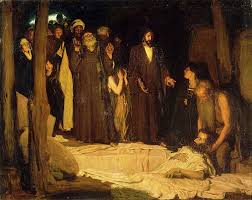
John 11:1–45 | Psalm 130 | Ezekiel 37:1–14
I’ve had a rather unusual week.
I lost my voice with a chest infection that turned into Laryngitis – it is only just beginning to return. And so, this week has been marked by an unexpected companion: silence.
Proper silence.
The kind you don’t choose.
The kind where even whispering makes things worse.
And if, like me, you are someone who loves to talk… it is not an easy thing to accept.
But silence, I have discovered again this week, is not just absence.
It can feel uncomfortable – jarring, even frightening. It can feel like something is missing, like something has gone wrong.
And yet …
Silence can also be healing.
It can be spacious.
It can be quietly, stubbornly, full of life.
It made me think of that well-known line from The Sound of Silence
“People talking without speaking, people hearing without listening.”
There is a kind of silence that is empty.
But there is also a silence that is full.
A silence in which something is happening, even if we cannot yet hear it.
And that is the kind of silence our readings draw us into today.
Our readings are filled with the language of death.
But they are also filled with silence.
A valley of dry bones.
A cry from the depths.
A sealed tomb in Bethany.
Each one holds a different kind of silence.
In Ezekiel’s vision, the prophet is taken to a valley scattered with bones – not simply death, but long death. Bones dried out, bleached by time.
It is a silent place.
No breath.
No voice.
No movement.
The silence of a people who have lost hope for so long that even lament has faded.
And into that silence, God speaks:
“Can these bones live?”
It feels like a question asked into emptiness.
And yet – even here – the silence is not the end.
Because the breath of God begins to move.
At first, nothing dramatic. No sudden noise. Just the quiet, persistent work of God.
Bone joining to bone.
Sinew and flesh forming.
Breath returning.
Until the silence of death becomes the silence of awe.
The psalm gives us another kind of silence.
“Out of the depths I cry to you, O Lord.”
This is not the silence of emptiness, but the silence that follows crying out.
When the words have been spoken.
When the tears have fallen.
When there is nothing left to say.
And so, the psalmist waits.
“My soul waits for the Lord more than watchmen for the morning.”
It is a different kind of silence.
Not dead silence.
But waiting silence.
The kind of silence that stands on the edge of hope
straining toward the first hint of light.
And then we come to Bethany.
To the tomb of Lazarus.
And here, the silence feels heaviest of all.
Jesus arrives too late – or so it seems.
Four days.
The rituals are done.
The mourners have gathered and gone.
The stone is sealed.
And Martha names what others might avoid:
“Lord… there is already a stench.”
Death has done its work.
And with it comes that deep, uncomfortable silence.
The silence of finality.
The silence that says: this is over.
And yet – into that silence – Jesus speaks.
“Lazarus, come out.”
And everything changes.
Because the silence of the tomb is broken.
Not by noise for its own sake
but by the voice of the one who is life itself.
And perhaps this is what we begin to see:
That not all silence is the same.
There is the silence of death…
and there is the silence in which God is already at work.
As we draw close to Holy Week and as we conclude our series of journeying through Keeping Holy Time, we turn toward a day we rarely speak about.
Not Good Friday.
Not Easter morning.
But the day in between.
Holy Saturday.
And Holy Saturday is a day of silence.
Not the dramatic silence of Good Friday, where grief is raw and visible.
Not the joyful sound of Easter morning, where alleluias return.
But a deeper silence.
A quieter one.
The silence of waiting.
If you have ever sat in an empty church, you may know something of it.
Not the gentle stillness when others are praying nearby.
But the kind of stillness when the space is completely empty.
The altar stripped.
The candles extinguished.
The air heavy.
It is not just peaceful.
It can feel like absence.
Like something, or someone, is missing.
And that is the silence Holy Saturday invites us to enter.
The silence where Christ is no longer visibly present.
The one who spoke, who healed, who called Lazarus from the tomb…
is now silent.
Laid in the earth.
And yet, this is where the Church dares to say something extraordinary.
We don’t say it often, but if we confess it in the Apostles’ Creed when we say of Christ:
“He descended to the dead.”
Or, as it was once more starkly said in Book of Common Prayer:
“He descended into hell.”
It is a strange line.
Because the Gospels give us no words here.
Only silence.
But the early Church listened differently to that silence.
They heard it not as emptiness
but as movement.
Not as absence
but as presence hidden.
Because what if Holy Saturday is not the silence of nothing happening…
but the silence of something happening too deep for us to see?
The silence of Christ entering even the furthest reaches of death.
The silence of God going to the places we think are beyond reach.
The silence where the gates of death begin, quietly, to give way.
In the ancient imagination of the Church, this moment was pictured with astonishing hope.
Christ stands in the darkness.
Not defeated, but victorious.
The doors of death shattered beneath his feet.
And Christ reaches down,
to Adam, to Eve
to all humanity
and begins to lift them up.
It is the same pattern we have already seen.
The silence of the valley…
becoming the breath of life.
The silence after the cry…
becoming the waiting for morning.
The silence of the tomb…
broken by the voice of Christ.
And now, the silence of Holy Saturday…
becoming the hidden work of resurrection.
Because so much of our lives is lived here.
In this in-between.
Between prayer and answer.
Between loss and healing.
Between grief and hope.
Between Good Friday… and Easter morning.
And it can feel like silence.
Like nothing is happening.
Like God is absent.
But Holy Saturday gently, quietly, insists:
This is not the silence of death alone.
This may be the silence of God at work.
Deep. Hidden. Unseen.
And so, the Church waits.
Like the psalmist, watching for the morning.
Like Ezekiel, standing in the valley.
Like Martha, standing at the tomb.
Waiting.
Trusting.
Listening.
And then, when the time comes, the silence will break.
Not with chaos.
But with light.
A flame kindled in the darkness.
A single voice singing.
A whisper that grows into song:
Alleluia.
For now, though
we keep holy time.
We honour the silence.
We do not rush it.
Because even here…
even now…
God is at work. Amen
 Ruth Greenaway-Robbins
Leave a comment