
Sixth Sunday of Easter – John 14:15–21
I wonder if you’ve ever been asked that question, perhaps by a well-meaning Christian on a street corner, or in a conversation that suddenly takes a turn:
“Do you have a personal relationship with our Lord Jesus Christ?”
It’s a question I sometimes find difficult to hear. Not because the intention behind it is wrong, but because I’m never quite sure what is meant by it.
Of course I do.
And yet … it’s also more than that.
Because a relationship with Jesus is never just private, never simply individual, never something that exists in isolation. It is something we are drawn into together. It takes shape in community. It is formed and sustained in the life of the Church, where we learn, slowly and imperfectly, how to love one another.
Yes, you can live a Christian life outside the Church. But the Church is where that life is nurtured, stretched, deepened, where our relationship with Christ becomes caught up in our relationships with one another.
And that begins to open up something of what Jesus is saying in John chapter 14.
These are Jesus’ farewell words to his disciples. Beneath the surface of the passage there is anxiety, fear, uncertainty. What happens when Jesus is no longer physically with them? What happens when the one they have followed, leaned on, trusted, goes?
And into that fear, Jesus speaks these words:
“I will not leave you orphaned.”
It’s such a striking phrase.
Not: I will not leave you confused.
Not: I will not leave you without instructions.
But: I will not leave you orphaned.
Because what the disciples are feeling is not simply uncertainty. It is the fear of abandonment.
Perhaps we know something of that feeling too.
I wonder if you have ever experienced separation anxiety? Or perhaps you saw the other side as a parent, grandparent, or godparent. Perhaps dropping a child off at nursery or school, where they cling to you convinced that this is the moment everything will fall apart.
Or perhaps with a pet, who watches you leave as if the world is ending. My dogs definetly give me those looks.
That moment at the doorway can feel enormous. To the one being left, it can feel as though everything is being lost.
And yet we know something they do not yet know.
That five minutes later they are playing happily. That the relationship has not ended. That love has not disappeared.
And more than that: we carry them with us. We think of them. We hold them in mind. We long for their flourishing.
In therapy there’s a phrase for this – holding in mind – sometimes called object constancy. It describes the capacity to know that someone continues to love you and hold you in relationship, even when you cannot see them or feel their physical presence.
I wonder if that is something like what Jesus is giving to his disciples here.
Because he is preparing them for a kind of absence, but not abandonment.
“I will not leave you orphaned.”
“I am coming to you.”
“You know him, because he abides with you, and he will be in you.”
This is the promise of the Holy Spirit – the Advocate, the one who comes alongside.
Not as a replacement for Jesus, but as the continuation of his presence.
God does not step away and disappear.
God remains.
In the mystery of the Trinity, God holds us, draws us in, keeps us within that life of love.
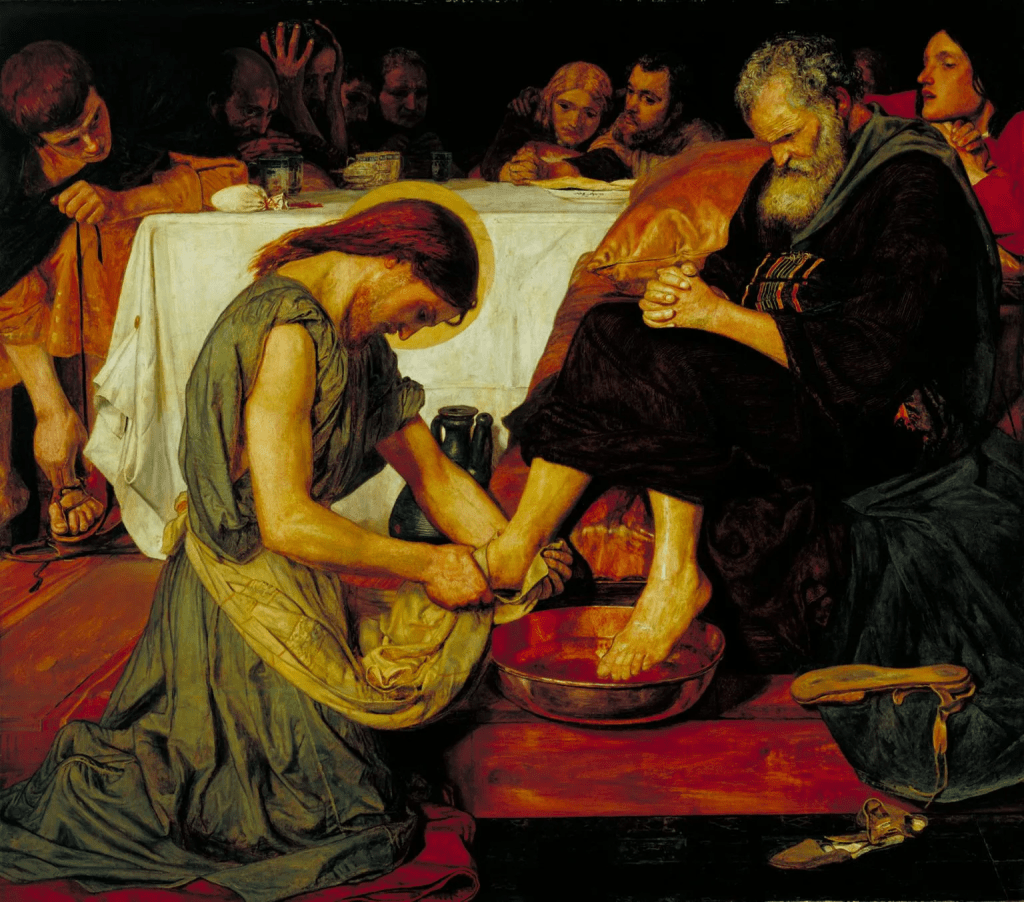
And so when we speak about a “personal relationship with Jesus,” perhaps this is what we mean.
Not simply a private feeling. Not simply an individual belief. But a relationship in which we are held. A relationship that continues even when we cannot see. A relationship sustained by the Spirit and lived out in community.
Because notice what Jesus says:
“If you love me, you will keep my commandments.”
And this week, those words land with particular weight.
We have watched elections unfold. We have heard rhetoric online, on our televisions, and in our newspapers shaped by an “us and them” narrative.
We are seeing again the rise of division. Racism in its many forms finding voice. The far right seeking to shape a story of fear and distrust.
And perhaps most painfully, we even see those who profess Christian faith caught up in that same language; peddling suspicion, hostility, and division.
And we must be clear: this is so far from the commandment of Christ.
“If you love me, keep my commandments.”
And what is that commandment?
“Love one another as I have loved you.”
Not: love those who are like you.
Not: love those who agree with you.
Not: love those who are easy to love.
But:
Love one another as I have loved you.
And suddenly that can feel very far off.
Because loving like that is costly.
It asks something of us.
It asks us to resist easy narratives of “us and them.” It asks us to see the image of God even in those we struggle with. It asks us to remain in relationship even when it is uncomfortable, complex, or difficult.
And this is why community matters so deeply.
This is why the Church matters.
Because this kind of love is not something we generate on our own. It is something we learn together. Something we practise, often imperfectly. Something formed in us over time.
Deepening our life together, and our engagement with the wider community, is not an optional extra. It is at the heart of what it means to follow Christ.
It is the work of resisting division.
It is the work of love.
And that is nothing less than living out the commandment of Jesus.
So perhaps the question is not simply:
“Do you have a personal relationship with Jesus?”
But:
Do you know, truly know, that you are held by God?
Do you trust that Christ does not abandon you, even in absence, uncertainty, or fear?
And if you are held in that love, how is that love taking shape in the way you hold others?
Because we are not left alone.
We are not abandoned.
We are held in the life of God; Father, Son, and Holy Spirit.
And in that holding, we are given to one another.
 Ruth Greenaway-Robbins
Leave a comment