
Nehemiah 8:1–4a, 5–6, 8–12; Matthew 24:30–35
I wonder whether there is a passage of Scripture that has stayed with you.
Something you heard as a child. Words read at a wedding or a funeral. A narrative that helped you see yourself differently. A promise in Scripture that you have held onto when life has been difficult.
Perhaps, there is also a passage you struggle with. Something that troubles you, or leaves you wondering what on earth are we supposed to do with it.
Both feels and expereinces about Scripture belong in our life of faith. We must bring our gratitude and our questions as we listen for God.
Today we have celebrated Bible Sunday: an opportunity to give thanks for Scripture, and to ask how we allow it to shape us.
Our collect prayer gaves us some wonderfully practical words for doing that: hear, read, mark, learn and inwardly digest.
Those words come to us through Thomas Cranmer’s Prayer Book, where this prayer belonged to the Second Sunday of Advent. Generations of Christians have prayed them, asking for Scripture to take root in their lives.
And that last phrase is particularly striking.
Inwardly digest.
Digestion takes time. What nourishes us becomes part of us, sustaining us as we go about our lives.
That is what we are asking of Scripture: that it might nourish our faith, strengthen our hope, and shape the way we live.

Today in our lectionary we heard from Nehemiah, we meet a whole community discovering what that means.
The people are rebuilding after catastrophe. Jerusalem had been conquered, the Temple destroyed, and many of its people taken into exile. Now, under Persian rule, people had returned. The Temple had been rebuilt, and the city walls restored.
But there was more to rebuild than buildings.
How would they live together after everything they had experienced? What would hold them together? What did it mean now to be God’s people?
They gather in the square before the Water Gate and ask Ezra, the priest, to bring out the book of the law of Moses.
Notice that: the people ask.
There is a hunger here. They want to hear the words through which they can understand who they are and how they are called to live.
Ezra reads, and others help explain what is being read. The people need time and help to understand.
And as they listen, they weep.
We are not told everything behind those tears. Perhaps there is grief for what has been lost. Perhaps they recognise how far their lives have wandered from God’s purposes. Perhaps they are overwhelmed to discover that, after exile and upheaval, they still belong.
Then comes an instruction we might not expect.
Go and eat. Celebrate. Share with those who have nothing prepared.
Their encounter with Scripture leads them towards joy and generosity. What they have heard changes what happens at the table. Someone who might have gone without is included.
Here is something for us to carry through this morning: what difference does hearing Scripture make to the way we live together?
Our Gospel also speaks into a world of upheaval. Jesus speaks of suffering, uncertainty, and things that seem permanent being shaken. Some of this language is difficult. It asks us to listen carefully, and we may still find ourselves carrying questions.
Within it, Jesus offers a familiar picture: a fig tree.
When its branches grow tender and its leaves appear, you know that summer is approaching. We are invited to learn to recognise the signs.
Jesus calls his disciples to that kind of attentiveness. And he gives them a promise:
“Heaven and earth shall pass away, but my words shall not pass away.”
His words will endure through everything that lies ahead.
As we return to them, we learn to recognise the Lord who speaks them. Across the Gospels, we encounter his mercy, his challenge, his welcome and his costly love. Through his life, death and resurrection, we discover the character of God’s kingdom.
And we begin to ask: what would it mean for that kingdom to shape our lives here?
Answering that takes patience, prayer, and a willingness to discover that our first understanding may be incomplete.
Thankfully, we do not have to do it alone.
Within the Anglican tradition, Scripture has a central place. We draw on tradition, reason and experience to help us understand and respond to what we read.
We listen alongside generations of Christians who have prayed these words before us, and Christians across the world who may hear something we have missed.
We use our minds. We ask about history, language and context. Are we reading poetry, a parable, or a letter addressing a particular community? What might its first hearers have understood?
And we bring the lives we actually live: our love and suffering, our questions and discoveries.
Sometimes an experience opens our ears to something in Scripture.
Sometimes Scripture challenges the conclusions we have drawn from experience.
That conversation matters. It helps us remain open to learning, and reminds us why we need one another.
It is also part of the value of the lectionary.
Each Sunday, we receive readings we have not simply chosen to suit ourselves. Some comfort us. Some bewilder us. Some confront something we would prefer to leave undisturbed.
Over time, we hear a fuller story: God’s faithfulness to the people of Israel, the witness of the prophets, the life of Jesus, and the struggles of the earliest churches.
Week by week, that story works upon us.
Sometimes a passage speaks immediately. Sometimes its meaning unfolds slowly. Words we have heard for years sound different because our lives have changed, or because someone helps us hear them afresh.
So how might we make room for that beyond Sunday?
Perhaps by returning during the week to the Gospel we have heard here. Reading a few verses slowly, and noticing what draws our attention. What encourages us? What troubles us? What might ask something of us?
And we can find ways of reading that help us. An audio Bible. Another translation. Reading with someone else.
I have recently started using a Bible with a dyslexia-friendly typeface, and it has made a wonderful difference to my own reading. Something as practical as the way words appear on a page can help us spend time with them.
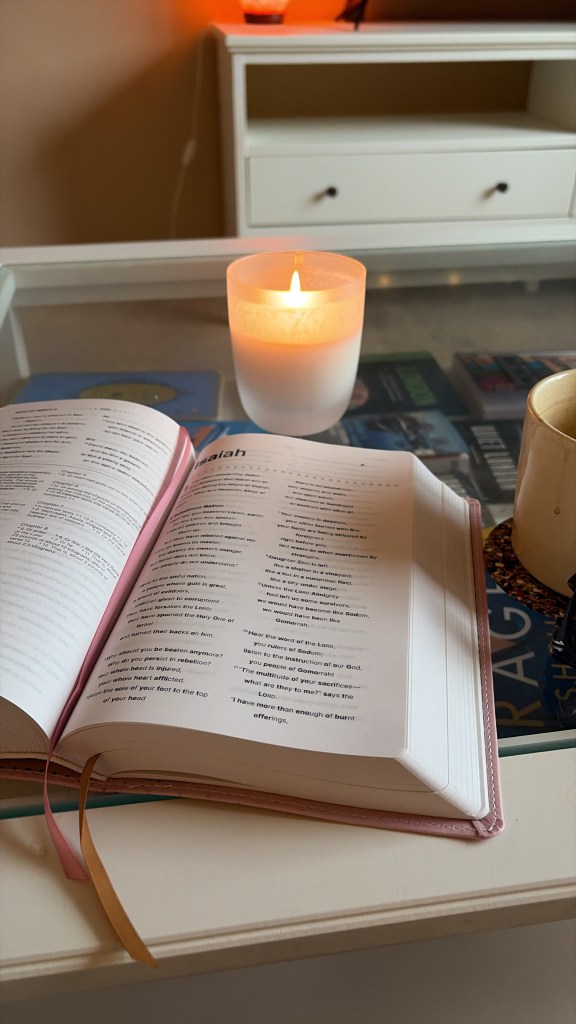
As a Church, we can also make room for questions: in Bible studies or in book groups, in conversation, and whenever someone says, “I don’t understand this”, being brave enough to discover together.
Remember the people gathered around Ezra. They needed help to understand. That need belonged within their worship. It belongs within ours too.
Perhaps we might also grow more confident about sharing what Scripture has done in our lives. The words that sustained us. The passage that prompted an apology. The story that helped us welcome someone we might otherwise have overlooked.
Those are signs of the word taking root.
For each of us, a question to keep asking is: what kind of people are we becoming through hearing Scripture?
Are we becoming more attentive to Christ?
More generous with one another?
More ready to recognise a neighbour’s need?
In Nehemiah, the people hear, they understand, and they share their food.
May that same movement happen among us. May what we hear deepen our understanding, and may what we understand find expression in love.
As we gather at Christ’s table today, may the word we have received shape the lives we take out into the world.
And I encourage us all to pray the collect for bible Sunday using the traditional words of the collect:
Blessed Lord, who hast caused all holy Scriptures to be written for our learning: Grant that we may in such wise hear them, read, mark, learn, and inwardly digest them, that by patience, and comfort of thy holy Word, we may embrace, and ever hold fast the blessed hope of everlasting life, which thou hast given us in our Saviour Jesus Christ.
Amen.


Leave a Reply